Vegetables & Side DishesOriginal
Frozen French Fries
Frozen French Fries (Shoestring)Rice bran oilSalt
récolte · RAO-2
View Ingredients and Instructionsrécolte / RAO-2
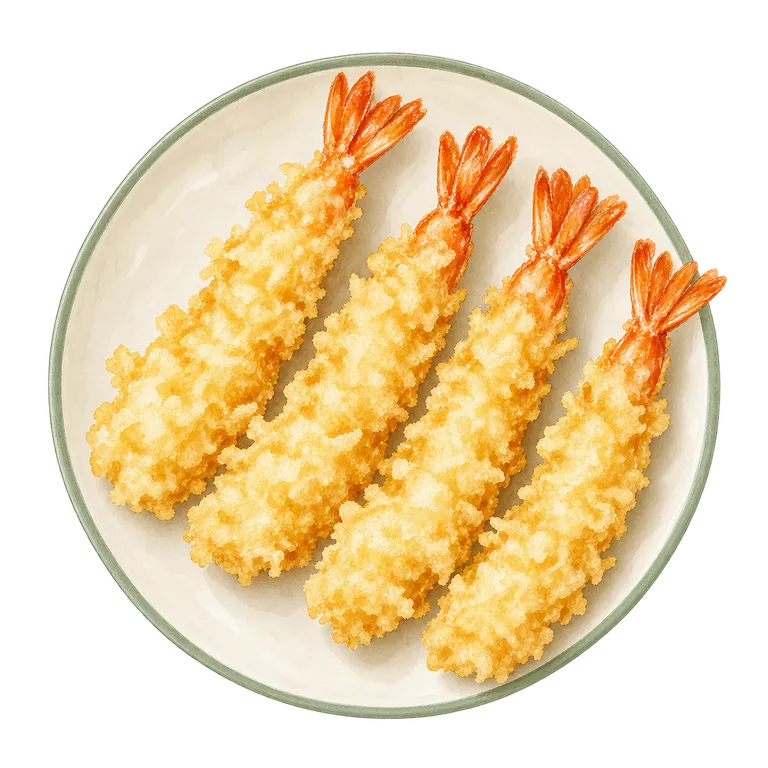
Reheat 4 refrigerated, pre-cooked shrimp tempura sticks in an RAO-2 (which has no temperature settings) with an initial setting of 10 minutes, the same as the manual's guide for reheating fried deli foods. Do not use oil or aluminum foil.
The official sources referenced are listed in the "References" section at the bottom of the page.
For information on the use of AI and the scope of verifiable content, please refer to our general posting guidelines. Please read the preconditions and instructions for each step before cooking, and verify the final result using the method described in the text.
Illustrations are AI-generated images. They are not photographs of actual cooking or evidence that the food has been cooked through.
After 5 minutes, turn the timer dial back to 0 to stop it, pull out the basket, and place it on a trivet. Flip the 4 pieces over once and switch their front and back positions. Remove any pieces where the coating has started to burn; do not return them to the basket, and set them aside without eating them. Return the remaining pieces to the inner rack, securely place the basket back into the unit, turn the timer dial once to a setting of 10 minutes or more, then turn it back to the remaining 5 minutes and resume cooking. If you notice smoke, an unusual odor, or any other abnormalities, immediately turn the timer dial back to 0, unplug the unit, and follow the instructions in the user manual.
Instructions for preheating, mid-cooking checks, and how to check for doneness are included in the preparation instructions.
Reheat the shrimp tempura—which has been thoroughly cooked through after purchase or preparation—from a chilled state according to the product label. This is not the traditional tempura method of coating raw shrimp in batter and frying it.
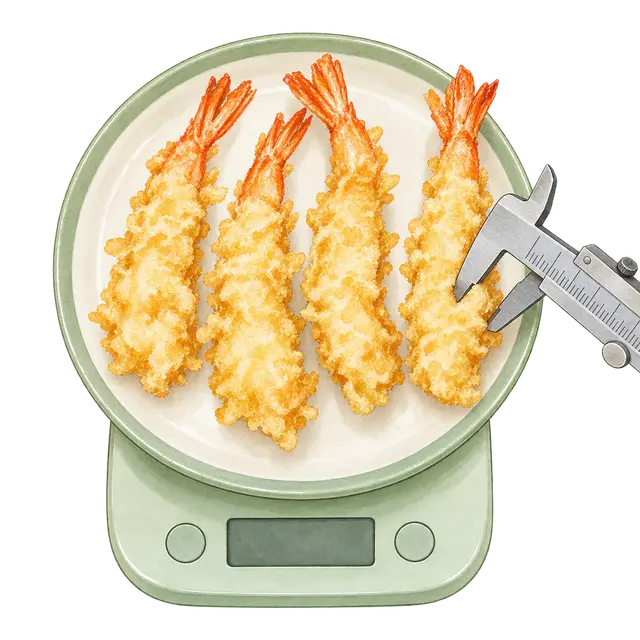
Check the storage instructions and use-by date on the product label. Weigh 4 refrigerated, fully cooked shrimp tempura pieces and confirm that they total 120g and that each body is no more than 18mm thick including the coating. Do not use pieces with sauce, moisture, or substantially detached coating. Do not add oil.
Set the inner rack in the basket and make sure the rubber covers are attached to the inner rack. Place the cooled unit on a flat surface, verify that the timer dial is set to 0, and then plug it in. Do not preheat, and do not adjust the temperature settings.
Discuss these instructionsDo not use aluminum foil, parchment paper, or heat-resistant containers; place 4 shrimp tempura directly onto the inner mesh rack. Do not stack them; leave enough space so they do not touch each other, and keep the tails away from the heating element. Do not block the mesh openings of the inner rack, and do not place them beyond the MAX line.
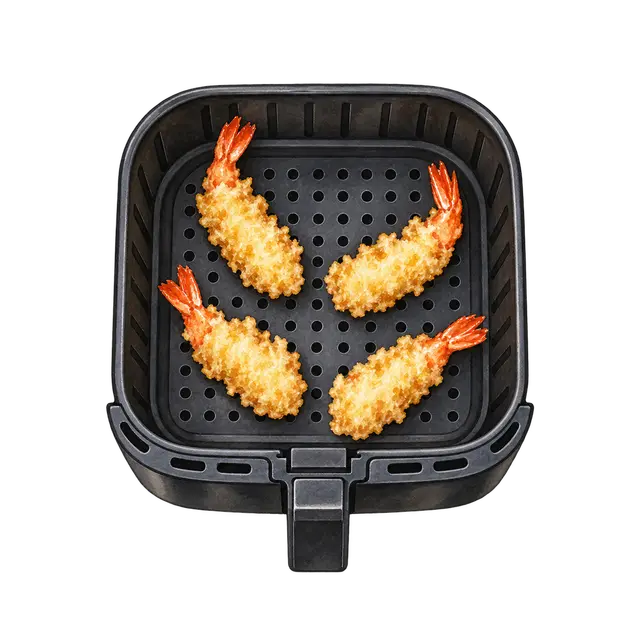
Securely place the basket into the unit, turn the timer dial once to a setting of 10 minutes or more, then turn it back to 10 minutes to start cooking. When 5 minutes have passed according to an external clock, turn the dial back to 0 to stop the timer, pull out the basket, and place it on a trivet. Flip the 4 pieces over and switch their front and back positions. Check the progress according to the guidelines in the “Heating Stages” section. Return only the pieces that go back in to the inner rack, securely place the basket back into the unit, turn the dial once to a setting of 10 minutes or more, then set it to the remaining 5 minutes and resume cooking.
Discuss these instructionsOnce the set cooking time has elapsed, crack open the 2 thickest pieces of battered shrimp on a clean plate. Serve only if the shrimp is hot all the way through with no cold spots, the surface of the batter is dry, and there are no burnt or hard spots. If the center is still cold, remove the entire batch and proceed to the final check. Do not consider the dish finished based on surface color alone.
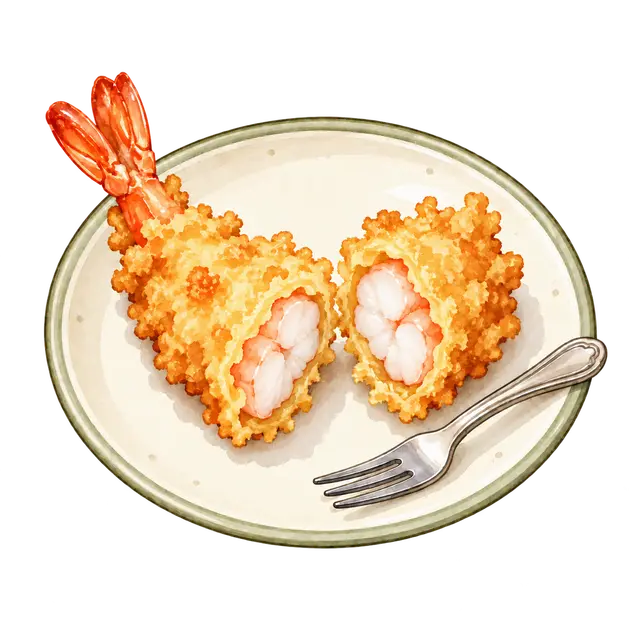
Transfer the shrimp tempura that meets the readiness criteria to a clean plate. Do not cover with a lid or plastic wrap to prevent the batter from becoming soggy, and eat while still warm. If using tempura dipping sauce, serve it in a separate bowl after reheating the shrimp tempura.
Discuss these instructionsIf the food does not meet the completion criteria, stop heating and do not eat it. Do not extend the cooking time beyond the official guideline of 10 minutes. Check the actual cooking time, the quantity and thickness of the food, how long it has been out of the refrigerator, and the condition of the center and the coating.
Discuss these instructionsBreak open the 2 thickest of the 4 shrimp tempura pieces, including their coating, on a clean plate. Check that the shrimp is hot all the way to the center with no cold spots, and that the surface of the coating is dry with no burnt or hard areas. Do not eat any piece with a cold center; proceed to the final check.
Things You Can Verify Without Consulting Anyone →
This method cannot be used. It is intended only for 4 pieces of shrimp tempura that have been thoroughly cooked through and then refrigerated after purchase or preparation. Raw shrimp, uncooked batter, and frozen products require different cooking instructions.
Do not line the basket with anything in this recipe. Covering the mesh of the inner basket hinders the circulation of hot air, resulting in uneven drying and heating of the batter. Do not place the food in a heat-resistant container; instead, arrange it in a single layer directly on the inner basket.
Do not add any additional oil. Reheat the food using the residual oil remaining in the batter from the initial frying; do not use a pool of oil or cooking spray. Do not use this method if the food is covered in sauce or water.
Do not reheat them together. Since the thickness, moisture content, and amount of batter vary, we’ll limit this to 4 shrimp tempura for now. We will not adjust the quantity or time for mixed platters, kakiage, chikuwa tempura, etc.
Refrigerate the product according to the package instructions, then check the quantity and the condition of the batter before adding it. Do not use products that have passed their expiration date, have been left at room temperature for a long time, or have been frozen.
RAO-2 User Manual, p. 9, “Cooking Guidelines”: Reheating Fried Dishes ↗
Source checked: 2026-10-25
Notes are saved only on this device. They are not used to determine whether a recipe has been verified.
récolte · RAO-2
View Ingredients and Instructions
récolte · RAO-2
View Ingredients and Instructions